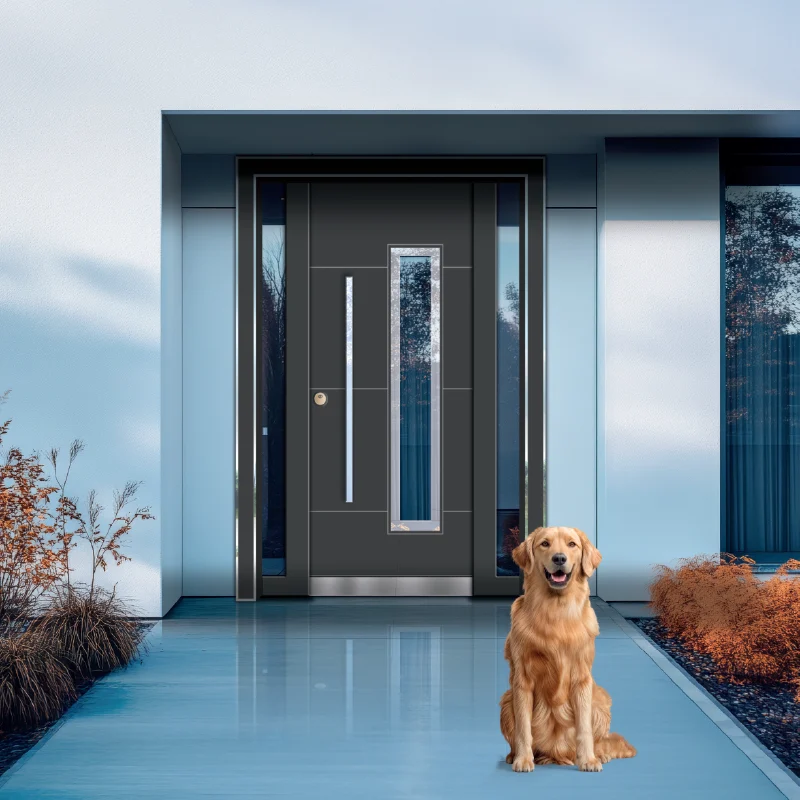
The prestige of owning a villa starts with choosing the right door. Your entrance door — the first impression of your home — is a critical decision for both security and aesthetics. How do you choose among hundreds of models? This guide brings together everything you need to know.
Why does a villa door require special consideration?
Unlike a standard apartment door, villa doors carry greater responsibility. They face the weather year-round and act as a design element that reflects your home's architecture.
They are often produced in custom sizes outside standard dimensions, which demands more careful selection.
7 essential criteria for choosing a villa door
1. Security standards and classes
Security is the top priority. Under TSE standards, steel doors are classified into classes A, B, C, and D. For villas, class C is the minimum; class D is ideal.
Features of a class D door:
- Sheet thickness of at least 2 mm
- Multi-point locking system (at least 5 points)
- Reinforced frame
- Anti-panic hinges
- Steel-reinforced body
For more details, see our villa door collection.
2. Size and dimensions
Villa doors are larger than apartment doors. Common sizes:
- Single leaf: width 100–120 cm, height 220–240 cm
- Double leaf: width 180–240 cm, height 220–260 cm
- Custom size: according to the architectural project
Consider the width and height of your entrance; an oversized door can look out of proportion.
3. Material quality
The materials used directly determine durability:
Contact Us
Request a quote for your project
Get information on models, sizes, and installation options for villa doors.
4. Design and aesthetics
A villa door should complement your home's architecture — and elevate it. Whether you choose modern, classic, rustic, or minimalist styling, it should harmonize with the overall concept.
Popular designs:
- Laser patterns: elegant contemporary look
- Glass details: natural light and spacious feel
- Wood-look finish: warmth and natural character
- Minimalist: clean lines with strong presence
Explore villa door models to find the right design.
5. Weather resistance
Exterior villa doors are exposed to rain, snow, sun, and wind:
- UV-resistant coating
- Water-sealing system
- Good thermal insulation
- Corrosion-resistant materials
6. Locking and security systems
A mechanical lock alone is no longer enough:
- Multi-point lock: 5–7 locking points
- Fingerprint reader: no keys to carry
- PIN lock: code-based entry
- Remote control: via mobile app
- Alarm integration: linked to your security system
7. Sound and thermal insulation
- Sound insulation: reduce outside noise by at least 60%
- Thermal insulation: lower energy loss
- Air tightness: keep out wind and dust
Types of villa doors
Single-leaf door
Ideal for standard entrances. Usually 100–120 cm wide. Practical for everyday use.
Double-leaf door
For wide, prestigious entrances. Width can reach 240 cm. Makes moving large furniture easier.
Pivot doors
Popular in modern architecture. They rotate on top and bottom pivots. Suitable for large sizes with a striking minimalist look.
Laser-cut villa doors
Laser-cut patterns combine security and beauty. With glass details, they create a stunning effect.
Choosing color and finish
Door color should harmonize with the façade:
| Color | Architectural style | Character |
|---|---|---|
| Black | Modern, minimalist | Elegant and prestigious |
| Anthracite gray | Contemporary, industrial | Neutral and refined |
| White | Classic, Mediterranean | Clean and bright |
| Wood look | Rustic, natural | Warm and welcoming |
| Gold/bronze | Luxury, classic | Distinctive and rich |
Price ranges and budget
Prices vary by size, material quality, design, and specifications:
- Economy: standard size and simple design
- Mid-range: custom design and good materials
- Premium: custom size, smart systems, and refined details
Remember: a villa door is an investment. A quality door serves 20–30 years. Think long-term value, not short-term savings.
Installation and commissioning
- Measurement: accurate on-site sizing
- Production: 2–4 weeks (longer for custom designs)
- Removing the old door: careful dismantling
- Frame installation: secure and level fitting
- Door installation: adjustment and testing
- Final inspection: lock, hinges, and seals
Maintenance tips
- Lubricate hinges twice a year
- Clean the lock mechanism regularly
- Wipe the surface with a soft cloth; avoid abrasives
- Clean glass with a suitable cleaner
- Have the door inspected annually by a specialist
Frequently asked questions
What security class is enough for a villa door?
Class C is the minimum; class D provides the highest security standard.
Single leaf or double leaf — which is better?
It depends on entrance width and usage habits. Double leaf for wide entrances; single leaf for standard openings.
How long does production take?
Standard models: 2–3 weeks; custom designs: 4–6 weeks.
Are smart locks secure?
Trusted brands can be more secure than mechanical locks by combining physical and digital protection.
Conclusion: how to choose the right villa door
Choosing a villa door is an important decision that should not be rushed. You need balance among security, aesthetics, durability, and budget. By following the criteria in this guide, you can select the door that fits best.
A good door raises your home's value, protects your family, and serves you for years. Don't hesitate to consult experts.
At Yiğit Çelik Kapı, we have served thousands of customers with villa doors since 2003. With TSE-certified production and 40,000 m² capacity, we can design your dream door together.
Yiğit Çelik Kapı
Villa door models
Get a quote and technical support for TSE-certified villa entrance doors.