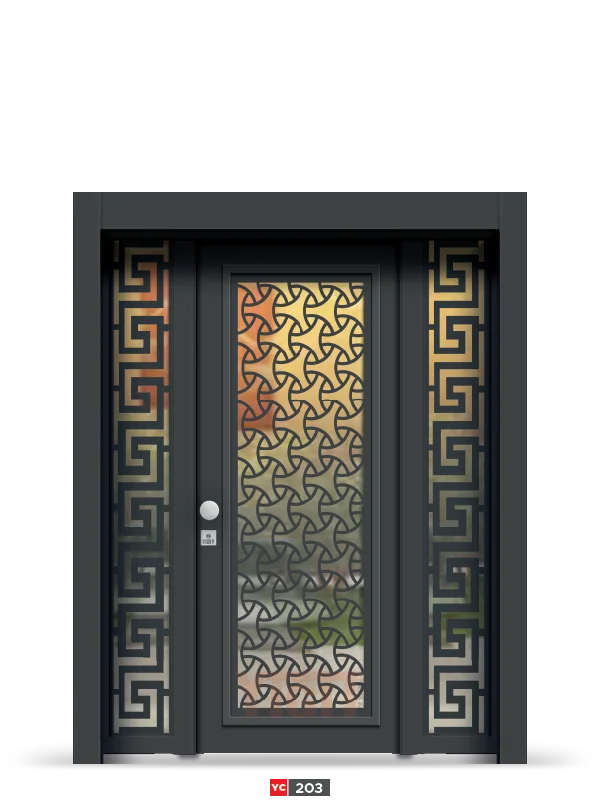
An apartment building's exterior door is the first line of defense for residents and a defining element of the building's façade. What should you consider when choosing a door used by hundreds of people every day? What criteria matter in an owners' meeting? This guide covers everything you need to know.
Why does an apartment exterior door need special attention?
An apartment exterior door works under tougher conditions than interior apartment doors. It may be opened and closed dozens of times a day, used by many different people, and exposed to weather continuously. Durability, security, and service life are therefore critical.
It is also a shared investment; the wrong choice becomes a costly problem affecting all owners.
8 essential criteria for choosing an apartment exterior door
1. Heavy-use durability
A building entrance door may be opened 50–100 times a day. That requires:
- Strong hinges: at least 4, rated for heavy loads
- Thick sheets: minimum 1.5 mm; 2 mm ideal
- Reinforced frame: resists deformation
- High-quality lock: rated for 100,000+ opening cycles
2. Security standards
An apartment exterior door must protect all residents. Under TSE standards, class C is the minimum; class D is ideal.
Contact Us
Request a quote for your project
Get information on sizing, installation, and model options for apartment exterior door projects.
3. Fire safety
Fire safety is critical for apartment exterior doors. In buildings above five floors, a fire-rated door may be mandatory.
Features of a fire door:
- 30–60–90 minute fire resistance
- Automatic closing system
- Smoke-sealing capability
- Fire safety certification
4. Sound insulation
Building entrances are often noisy zones. A good door reduces outside noise by at least 50–60% through:
- Double-wall construction
- Insulation fill materials
- Frame with sealing gaskets
- Thick glass (if applicable)
5. Weather resistance
- UV-resistant coating: won't fade or crack
- Water sealing: threshold to prevent rain ingress
- Corrosion-resistant materials: galvanized or stainless steel
- Thermal insulation: reduces energy loss
6. Ease of use and accessibility
- Easy opening and closing mechanism
- Automatic door option (hydraulic or electric)
- Threshold height suitable for accessibility
- Wide opening angle
7. Maintenance and repairability
- Simple maintenance
- Spare parts availability
- Local service support
- Long warranty
8. Aesthetics and architectural harmony
The building door is the face of the property. It should match the architectural style.
Types of apartment building doors
Single-leaf door
The most common choice. Width 100–120 cm. Suitable for small and medium buildings.
Advantages: economical, easy installation, compact footprint, simple maintenance.
Double-leaf door
For buildings with wide entrances. Width can reach 240 cm.
Advantages: wide passage, prestigious appearance, one leaf can be opened for ventilation.
Automatic doors
Hydraulic or electric. Preferred in buildings with a high proportion of elderly residents.
Specifications: remote opening, automatic closing, safety sensors, manual emergency opening.
What to discuss at the owners' meeting
1. Set the budget
Define the total budget for the door, installation, removal of the old door, and any additional work.
2. Technical specifications
- Security class (C or D)
- Fire resistance (if required)
- Sound insulation level
- Automatic system or not
3. Design selection
Choose a design approved by most owners. Present visual alternatives at the meeting.
4. Warranty and service
- Minimum two-year warranty
- Local service support
- Spare parts guarantee
- Periodic maintenance agreement
Price ranges and cost analysis
| Category | Specifications | Suitable buildings |
|---|---|---|
| Economy | Standard size, class C, simple design | Small apartment buildings |
| Mid-range | Class D, sound insulation, high quality | Medium buildings |
| Premium | Automatic, fire-rated, custom design | Large prestigious buildings |
Don't forget when calculating cost:
- Installation fees
- Removal of the old door
- Wall repair if needed
- Electrical work (for automatic doors)
- First-year maintenance
Installation process
- Measurement: 1–2 days
- Production: 2–4 weeks
- Installation day planning: notify residents in advance
- Removing the old door: 2–3 hours
- Installing the new door: 3–4 hours
- Testing and adjustment: check all functions
Installation day tips:
- Prefer a weekend if possible
- Plan an alternative entry/exit
- Coordinate elevator use
- Agree a clear schedule with the contractor
Long-term maintenance and use
Monthly check
- Ease of opening and closing
- Lock mechanism operation
- Automatic system (if fitted)
Semi-annual maintenance
- Lubricate hinges
- Clean and lubricate the lock
- Inspect seals
- Clean the surface
Annual professional maintenance
- Inspect all mechanisms
- Adjustment and tightening
- Seal inspection
- Coating and surface check
Frequently asked questions
How many owners need to approve the decision?
Under condominium law, changes to common areas require approval by a majority of owners (more than half).
How is the cost shared?
Usually from common expenses or equally among owners. Some buildings raise monthly dues.
Does an automatic door work during a power outage?
Yes — quality doors allow manual opening.
How long does production take?
Standard: 2–3 weeks; custom: 4–6 weeks.
Is a fire door mandatory?
In buildings above five floors and in certain use zones. Local regulations may vary.
Conclusion
Choosing an apartment exterior door affects every owner. Balance security, durability, aesthetics, and budget. A good door raises building value and serves 20–30 years.
At Yiğit Çelik Kapı, we have produced apartment exterior doors since 2003. With TSE-certified production and 40,000 m² capacity, we find the right solution for your building.
Yiğit Çelik Kapı
Apartment exterior door solutions
Get a quote for TSE-certified building entrance doors.